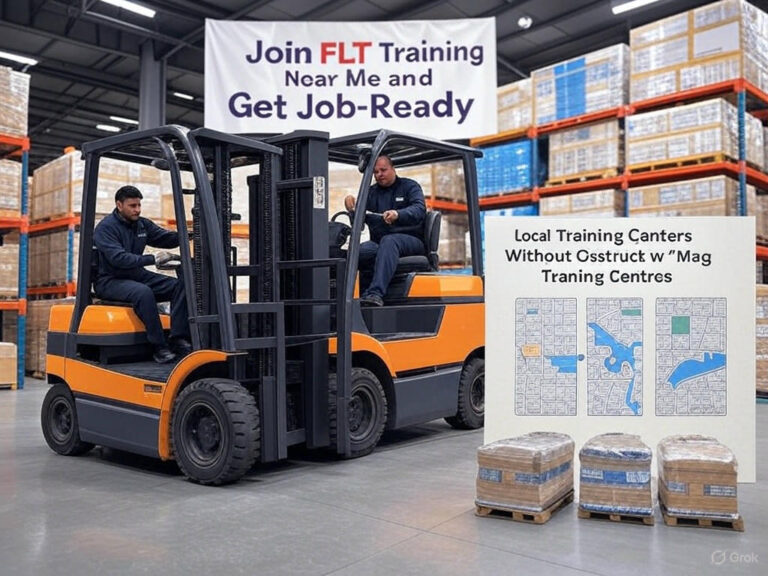

In today’s fast-paced industrial and logistics sectors, forklift operators play a crucial role in ensuring smooth operations. From warehouses and construction sites to manufacturing plants and distribution centers, forklifts are essential for moving heavy materials efficiently. However, operating these machines requires skill, precision, and adherence to safety protocols. That’s why many employers prefer hiring certified forklift operators who have undergone proper training and possess an accredited license.
The Importance of FLT Certification
Forklift operation may seem straightforward, but it involves several risks, including workplace accidents, equipment damage, and even legal consequences for businesses that fail to comply with safety regulations. This is why many individuals search for FLT courses to gain the necessary training and certification. A formal FLT (Forklift Truck) training course teaches operators how to maneuver different types of forklifts, handle loads safely, and follow industry standards. Employers value certification because it ensures workers have the skills and knowledge to operate forklifts responsibly, reducing workplace hazards and improving productivity.
How FLT Certification Benefits Employers
Employers who hire certified forklift operators experience several advantages, including:
1. Enhanced Workplace Safety
Accidents involving forklifts can lead to serious injuries and costly damages. Trained operators understand how to navigate tight spaces, manage heavy loads, and follow safety procedures, significantly reducing the risk of workplace accidents.
2. Legal Compliance and Reduced Liability
Health and safety regulations require businesses to ensure that their employees are adequately trained to operate forklifts. Hiring certified operators helps companies comply with these regulations, avoiding potential fines and legal complications.
3. Increased Productivity
A trained forklift operator can complete tasks efficiently without unnecessary delays. Proper training improves load-handling skills, reducing errors, material damage, and downtime. This leads to a more productive work environment, benefiting both employees and employers.
4. Lower Equipment Maintenance Costs
Mishandling forklifts can lead to mechanical wear and tear, increasing maintenance expenses. Certified operators are trained to use forklifts correctly, preventing damage to the equipment and extending its lifespan.
5. Competitive Advantage for Businesses
Companies that employ certified forklift operators stand out in the industry. Having a well-trained workforce improves a business’s reputation, instills confidence in clients, and ensures smooth logistics and supply chain operations.
Steps to Becoming a Certified Forklift Operator
If you’re considering a career in forklift operation, following these steps will help you get certified:
- Enroll in a Recognized FLT Course – Choose an accredited training provider that offers hands-on experience and theoretical knowledge.
- Complete Theoretical Training – Learn about forklift mechanics, load distribution, safety regulations, and operational best practices.
- Gain Practical Experience – Under expert supervision, practice maneuvering forklifts, lifting and stacking loads, and navigating different environments.
- Pass the Certification Exam – Demonstrate your skills through a practical assessment and a written test to obtain your FLT license.
- Apply for Jobs – With your certification in hand, explore opportunities in warehouses, logistics companies, construction firms, and manufacturing plants.
Summary
FLT certification is not just a requirement it’s a valuable asset that enhances workplace safety, boosts efficiency, and increases employability. Employers prefer certified forklift operators because they bring reliability, compliance, and skill to the workplace. If you’re looking for FLT courses near me, investing in proper training will open doors to better job opportunities and career growth in the logistics and warehousing industries.