
Considering enrolling in a forklift training course? Whether you’re a seasoned operator looking to refresh your skills or a complete novice eager to learn, understanding what to expect from a forklift training course is essential. These courses are designed to provide participants with the knowledge, skills, and certification necessary to operate forklifts safely and efficiently in various work environments. In this guide, we’ll take you through the step-by-step process of what you can expect from a typical forklift training course.
Course Enrollment:
The first step in embarking on your forklift training journey is enrolling in a course. You can typically find forklift training courses offered by vocational schools, community colleges, private training centers, and sometimes even through employers. A quick online search for “forklift course near me” can help you locate available options in your area. Once you’ve identified a suitable course, you’ll need to register and complete any necessary paperwork to secure your spot.
Classroom Instruction:
Forklift training courses typically begin with classroom instruction. During this phase, participants learn about the fundamentals of forklift operation, safety regulations, and industry best practices. Topics covered may include forklift components and controls, load handling techniques, pre-operational inspections, hazard identification, and emergency procedures. Experienced instructors use a combination of lectures, presentations, videos, and interactive discussions to convey essential information to participants.
Practical Training:
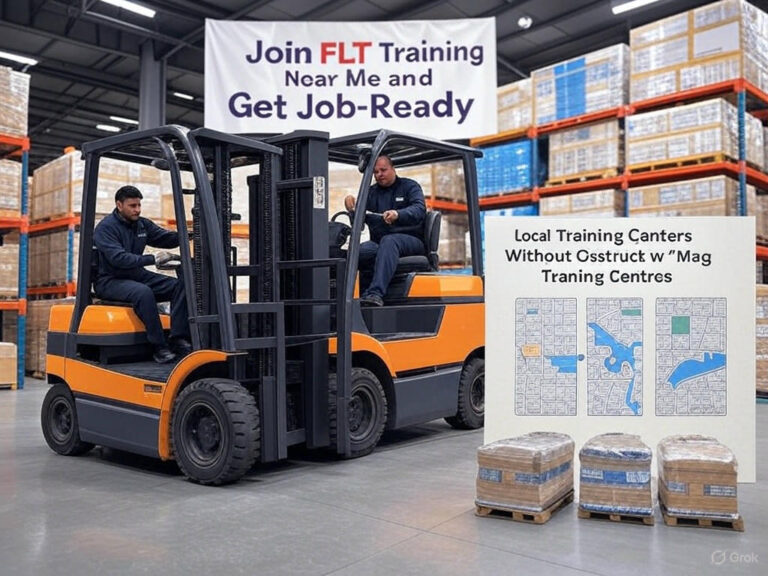
After completing the classroom portion of the course, participants move on to the practical training phase. This hands-on portion of the training is conducted in a controlled environment, such as a warehouse or training facility, equipped with forklifts and simulated work scenarios. Under the guidance of certified instructors, participants have the opportunity to familiarize themselves with operating a forklift, practice basic maneuvers, and perform tasks such as lifting, stacking, and maneuvering loads safely.
Skills Assessment:
Once participants have received adequate instruction and practical training, they undergo a skills assessment to evaluate their competency in operating a forklift. The assessment typically involves demonstrating various maneuvers and tasks, such as maneuvering through tight spaces, stacking and unstacking pallets, and performing safety checks. Instructors observe participants’ performance and provide feedback to help them improve their skills.
Written Examination:
In addition to the practical skills assessment, participants are usually required to complete a written examination to test their knowledge of forklift operation and safety procedures. The exam may cover topics discussed during the classroom instruction phase, as well as relevant regulations and standards set forth by organizations such as the Occupational Safety and Health Administration (OSHA). A passing score on the written exam is often necessary to obtain certification.
Certification:
Upon successful completion of the training course, participants receive a forklift operator certification. This certification serves as proof that the individual has completed the necessary training and demonstrated competency in operating a forklift safely. Certifications are typically valid for a certain period, after which operators may be required to undergo refresher training to maintain their certification. Employers may also require forklift operators to possess a valid certification as a condition of employment.
Ongoing Training and Development:
Forklift training is not a one-time event; it’s an ongoing process. Even after obtaining certification, forklift operators should continue to seek opportunities for further training and development. This may include attending refresher courses, staying updated on changes to regulations and best practices, and honing their skills through practice and experience. By investing in ongoing training and development, forklift operators can enhance their proficiency and contribute to a safer and more efficient work environment.
Final Thoughts:
Enrolling in a forklift training course is the first step towards becoming a skilled and certified forklift operator. By following the step-by-step guide outlined above, you can gain a clear understanding of what to expect from a typical forklift training course. From classroom instruction and practical training to skills assessment and certification, these courses are designed to equip participants with the knowledge and skills necessary to operate forklifts safely and effectively. Whether you’re new to forklift operation or seeking to enhance your existing skills, investing in forklift training is essential for success in this vital industry.